
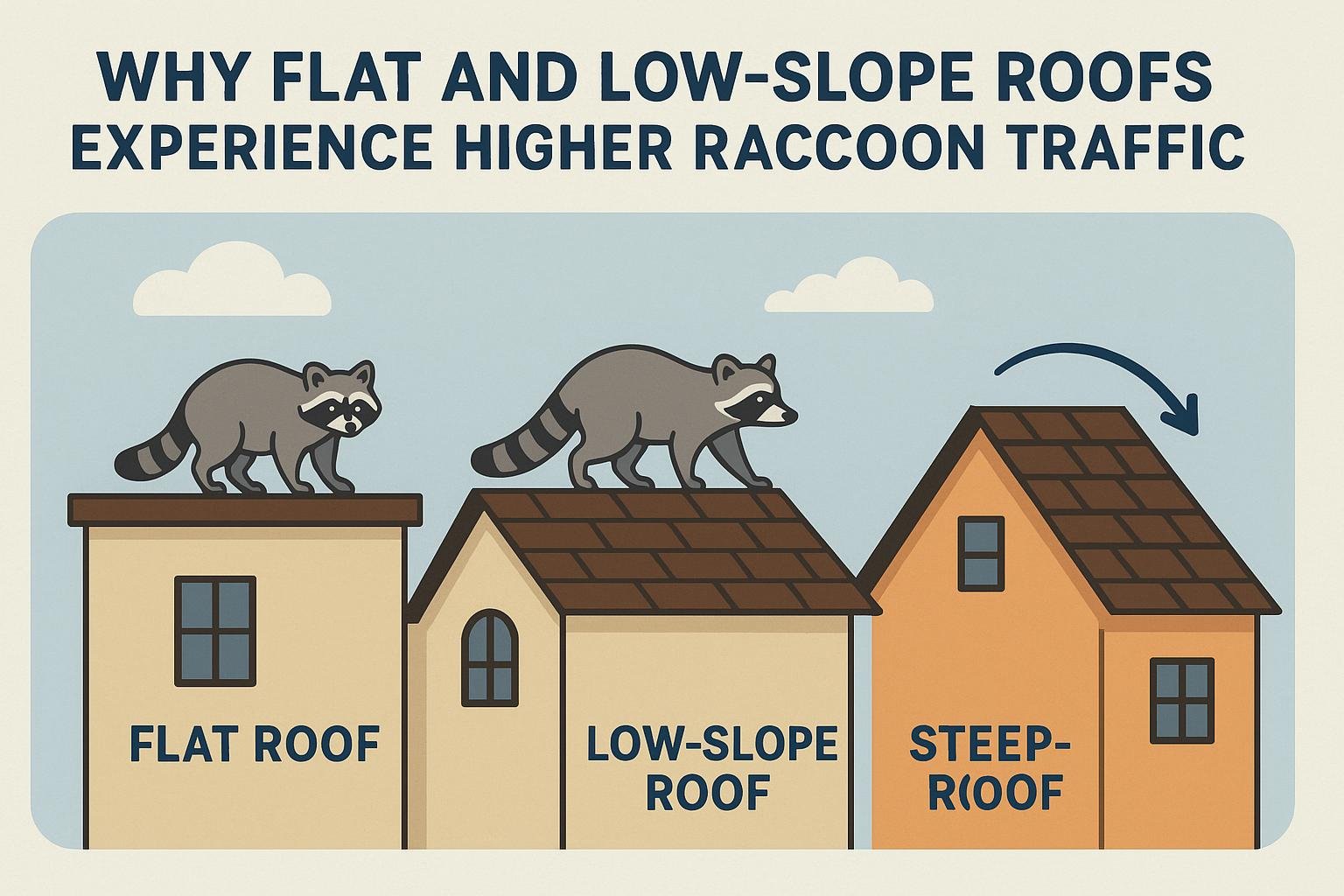
Why Flat and Low-Slope Roofs Experience Higher Raccoon Traffic
Raccoons are common urban and suburban wildlife in many parts of Ontario, including cities such as Toronto, Ottawa, and Hamilton. These animals often interact with residential buildings, especially roofs. Observations within these regions indicate that flat and low-slope roofs tend to have higher raccoon activity compared to steep-sloped roofs. Several factors contribute to this pattern, ranging from structural characteristics to raccoon behavior and urban environmental conditions. This article explores why flat and low-slope roofs attract more raccoons, relates this tendency to local housing types, and discusses seasonal and practical implications.
Raccoon Behavior and Urban Environments
Raccoons are adaptable and primarily nocturnal animals. They seek out safe resting spots and sources of food within urban and suburban settings. They often climb to elevated surfaces to avoid predators, distance themselves from human activity, or search for shelter. The roof of a house provides an appealing location for these purposes.
In Ontario’s urban areas, raccoons face limited natural spaces. They exploit the built environment to find suitable habitats. Their climbing ability allows them to access many roof types. However, not all roofs offer the same level of accessibility or comfort. In many cases, flat and low-slope roofs are easier for raccoons to navigate and use as temporary resting or foraging areas.
Structural Features of Flat and Low-Slope Roofs
Flat and low-slope roofs have a gentle incline, usually less than 10 degrees. This creates a stable surface for raccoons to walk, rest, and move around. Unlike steep-sloped roofs, these surfaces reduce the risk of slipping or falling.
In cities like Toronto and Ottawa, many commercial buildings and newer residential blocks have flat or low-slope roofs. Older homes may have steeper roofs, but contemporary architecture often favors lower slopes for economic or functional reasons.
On flat or nearly flat roofs, raccoons can stay longer and explore wider areas. The surface can also accumulate debris, leaves, and even nesting material. These materials provide both shelter and attractive habitat elements for wildlife. Raccoons may find these conditions more comfortable compared to steep roofs where footing is unstable.
Accessibility and Entry Points
Flat and low-slope roofs frequently adjoin parts of the building such as attic spaces, gutters, or ventilation systems. These areas can have gaps or openings. Raccoons exploit these vulnerabilities to enter attics or wall cavities.
In many older Ontario houses, roofing materials and flashing may deteriorate over time. Flat roofs also often have HVAC units, chimney systems, or satellite dishes that provide climbable structures. Raccoons use these to gain better access or shelter near the roof surface.
Steep roofs, by contrast, present a harder climbing challenge. They expose raccoons to more risk of falls and do not typically support lingering activity. As a result, raccoons prefer surfaces where they can easily move and explore attachment points.
Environmental Influences: Local Climate and Vegetation
Ontario’s climate includes cold winters and warm, humid summers. Raccoons respond to temperature changes and seasonal resource availability by seeking shelter in favorable spaces.
Flat and low-slope roofs often retain warmth longer during cooler periods due to heat generated inside buildings or solar absorption. This makes these spaces more inviting in spring and fall. In addition, nearby trees frequently border flat-roofed buildings in suburban neighborhoods. Tree branches can extend close to or even touch these roofs, providing easy access paths.
In neighborhoods with mature tree cover, raccoons can jump or climb across limbs to flat roofs. This connection is less common with steep roofs, which may have fewer adjacent branches or pose more complicated landing angles.
Common Misconceptions About Raccoon Roof Activity
One common misconception is that raccoons prefer roofs because they seek to nest there permanently. While raccoons do den in attics or wall spaces at times, their presence on roofs often relates to searching for food or travel routes rather than permanent residence.
Another misunderstanding is that raccoons damage only flat roofs. In reality, they can cause damage anywhere but tend to cause more noticeable wear on surfaces they frequent. Flat roofs may show more claw marks, shredded insulation, or displaced debris because raccoons spend more time there.
Some assume that raccoon activity on roofs is seasonal only. While activity can increase in spring and summer when animals seek mates or food, urban raccoons may use roofs year-round because of shelter availability and human waste access.
Constraints Explaining Raccoon Behavior Persistence
Despite awareness of raccoon presence, many flat and low-slope roofs continue to attract them. This persistence occurs because common protective measures have limits. Many roofs have features like flashing or ventilation that raccoons can penetrate if they find existing weaknesses.
Municipal regulations in Ontario restrict certain wildlife control practices during breeding seasons to protect raccoons and other urban mammals. This legal framework means that raccoon problems on roofs may return if not addressed in compliance with local rules.
The design of flat roofs also sometimes makes it difficult for building owners to monitor and maintain weak spots, increasing the chance of raccoon access and repeated visits.
Examples from Ontario Housing Types
In Toronto’s downtown area, mixed-use buildings often feature flat roofs with rooftop gardens or HVAC systems. These flat rooftops create easily navigable areas for raccoons, especially where tree-lined streets provide access.
In suburban Ottawa, many detached homes built after 1990 have low-slope roofs. These roofs sometimes support raccoon activity because of their moderate pitch and proximity to wooded backyards or parks.
In Hamilton’s older neighborhoods, homes with steep roofs are less likely to report raccoon roof access. Raccoon entry points are more frequently found in basements or crawlspaces rather than roof areas due to building design.
Pros and Cons of Flat and Low-Slope Roofs Related to Raccoon Activity
Pros:
- Flat and low-slope roofs provide easy surface area for maintenance and usage.
- They can retain heat, which may reduce winter energy costs.
- Vegetative rooftops on flat roofs may contribute to urban greening.
Cons:
- These roof types present stable surfaces favored by climbing wildlife such as raccoons.
- Accumulated debris on flat roofs offers nesting materials.
- Flat roofs are more vulnerable to damage from animal activity and water pooling.
- Greater chance of wildlife entry through adjacent vents or deteriorating seals.
Seasonal Activity Patterns and Roof Use
Raccoon use of roofs changes seasonally in Ontario’s climate. In warmer months, increased food availability draws raccoons outdoors. They use roofs as travel corridors between food sources and shelter.
During colder months, raccoons spend more time in attics or sheltered building areas. Flat roofs remain attractive because they border potential entry points and retain warmth. Spring often brings increased roaming and marking behavior as raccoons establish territories.
Urban noise and light levels can alter raccoon activity timing, sometimes encouraging daytime roof visits, though this remains less common.
Summary
Flat and low-slope roofs in Ontario’s urban and suburban areas tend to experience higher raccoon traffic due to several key factors. These roofs provide stable, accessible surfaces that support raccoon movement and resting. Structural features like vents and flashing can offer easy entry points into buildings from these roofs. Local climates and nearby vegetation also influence raccoon preference for
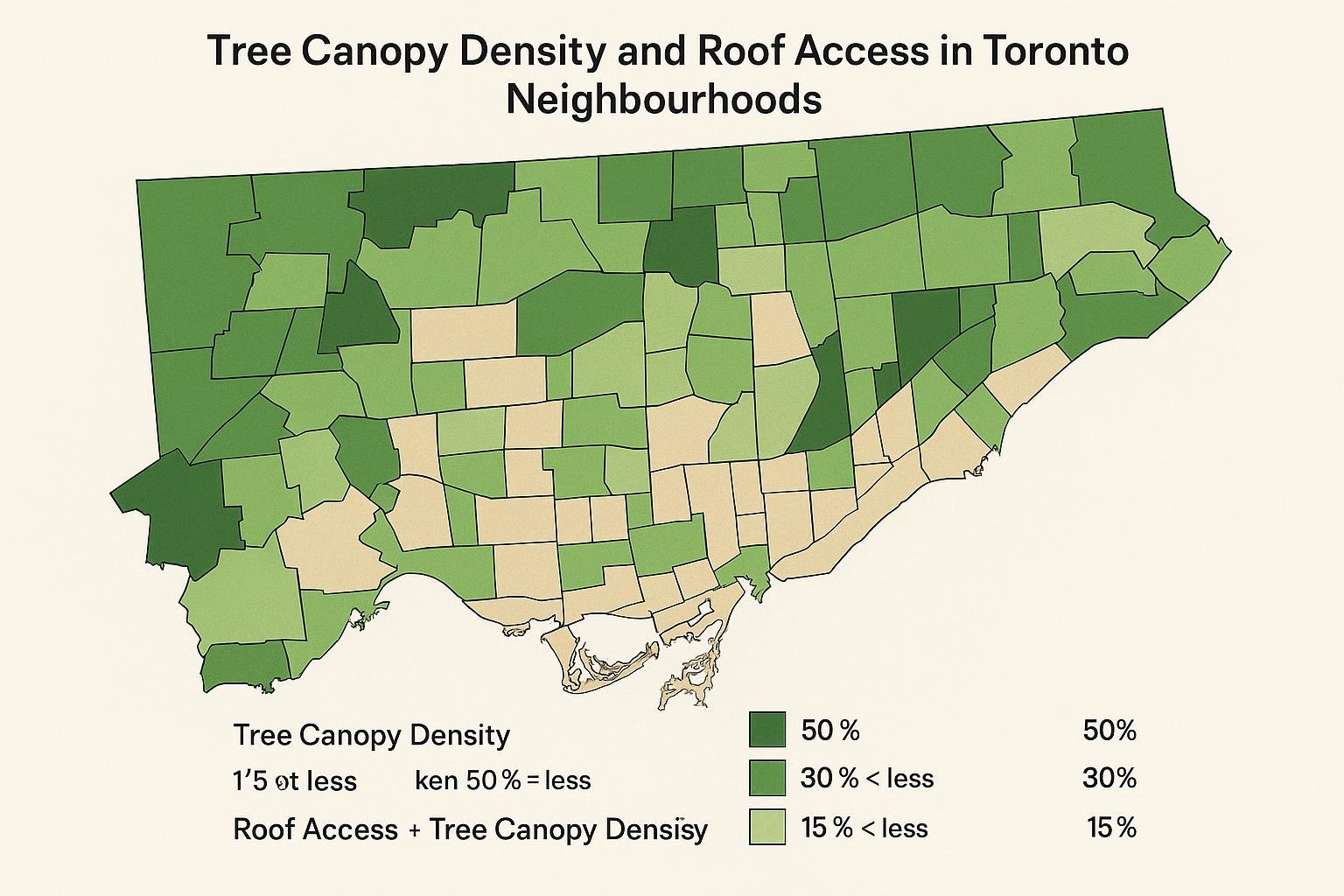
Tree Canopy Density and Roof Access in Toronto Neighbourhoods
Toronto is a large city with diverse neighbourhoods. Its urban spaces include varying levels of tree canopy density and different types of roof structures. These elements affect environmental conditions and the presence of wildlife in residential areas. Understanding tree canopy density and roof access helps explain certain pest or wildlife behaviors observed in the city.
Tree Canopy Density Explained
Tree canopy density refers to the amount of ground surface shaded by tree leaves and branches when viewed from above. In Toronto, this varies significantly across neighbourhoods. Older, established areas often have mature trees with dense canopies. Newer developments and highly urbanized zones typically have fewer large trees and lower canopy coverage.
High tree canopy density contributes to cooler microclimates in the summer. It also provides habitats for birds, squirrels, and urban wildlife. Trees create corridors that allow movement for animals above ground. In contrast, areas with sparse tree coverage tend to experience higher temperatures and reduced habitat connectivity.
Variation in Tree Canopy Density Across Toronto
Toronto’s neighbourhoods differ in tree cover due to historical land use, development patterns, and municipal planning. For example:
- The Annex and Roncesvalles are older neighbourhoods with many mature street trees and shaded yards. These areas show moderate to high canopy density.
- Scarborough features a mix of dense forest patches, such as in the Rouge Valley, and sprawling residential zones with scattered trees. Canopy density varies widely in this borough.
- Newer suburbs like Etobicoke and some parts of North York often have lower tree canopy density because of recent construction and less tree preservation.
Municipal records and satellite imagery can provide canopy density estimates. Toronto’s Urban Forestry department tracks tree planting and removal to maintain or improve tree coverage over time.
Why Tree Canopy Density Matters for Wildlife and Pest Activity
Trees attract birds, insects, and small mammals. Dense canopies offer shelter, food sources such as seeds and insects, and nesting spaces. Wildlife in dense urban forests may occasionally seek alternative shelter, including attics or roof spaces when trees are close to homes.
Emerald ash borer infestations, for example, are linked to the prevalence of ash trees within tree canopies in parts of Toronto. This pest causes damage to ash populations, altering urban tree coverage and influencing bird and insect populations dependent on those trees.
Areas with low tree canopy density may see fewer tree-dependent species. However, gaps in canopy can increase urban heat islands, which affect local insect activity, sometimes raising concerns about pests like mosquitoes during summer.
Roof Structures and Access in Toronto Neighbourhoods
Toronto homes vary in roof design. Roofs may be flat, pitched, or a combination, affected by architectural style, age, and neighborhood zoning. Roofing materials include asphalt shingles, flat membranes, tiles, and metal.
Roof access points are openings or conditions that allow wildlife or pests to enter roof cavities or attics. These include vents, chimneys, soffits, eaves, and gaps around flashing. Access can be intentional, like attic ventilation, or result from deterioration or damage.
In older Toronto houses, roof access points may not be well-sealed, creating entry routes for animals. Squirrels, raccoons, and bats often use these openings for nesting or shelter. In newer constructions, building codes require better sealing and ventilation, but access can still occur through damage over time.
Relationship Between Tree Canopy and Roof Access
When tree canopy extends close to or overhangs roofs, it can facilitate wildlife movement to roof access points. Animals use branches as bridges to reach homes without descending to the ground. This increases the likelihood of entry into attics or cavities, especially if access points exist.
Toronto’s urban tree management practices sometimes include trimming branches away from buildings to reduce this risk. Dense canopies combined with unprotected roof access points raise the chance of wildlife establishing nests within roof structures.
On the other hand, neighbourhoods with sparse trees have fewer such pathways. Wildlife may have less access to roof spaces but might seek other shelter in ground-level structures or remain in green spaces.
Seasonal and Environmental Patterns Affecting Roof Access
Seasonal changes impact both tree canopy density and wildlife behavior in Toronto:
- Spring and Summer: Full leaf cover creates dense canopy environments. Wildlife activity increases with breeding season. Animals use tree branches for food and travel. Roof access points may attract animals seeking nesting sites.
- Fall: Trees lose leaves, reducing canopy density temporarily. Wildlife may explore more ground-level shelters. Roof access patterns can change as animals prepare for winter.
- Winter: Canopy cover is minimal. Some animals remain in roof cavities for warmth. Cold weather may drive wildlife from outdoor dens into buildings if access exists.
Toronto’s climate—characterized by cold winters and warm summers—also affects when animals use roofs. Roof access points become important for species that hibernate or shelter during cold months.
Common Misconceptions About Tree Canopy and Wildlife Access
One misconception is that high tree canopy density alone causes wildlife infestations in homes. While trees provide pathways and habitats, roof access depends on structural entry points and gaps.
Another misunderstanding is that removing all trees near homes eliminates wildlife access. Trees also provide environmental benefits, such as cooling and stormwater management. Complete removal might reduce habitat but can increase urban heat and affect neighbourhood ecosystems.
It is important to recognize that roof access issues result from a combination of tree proximity, building design, maintenance, and local wildlife patterns.
Legal and Regulatory Considerations in Toronto
Toronto’s municipal bylaws regulate tree removal, planting, and preservation. Protected tree species require permits to remove or prune. These rules help maintain tree canopy density in established neighbourhoods.
Building codes mandate standards for roof construction and ventilation. These aim to prevent moisture buildup and maintain structural safety but do not directly address wildlife exclusion.
Wildlife species such as bats are protected by provincial and federal regulations. Interference with bats, especially during maternity season, is restricted by law. This influences how roof access issues can be addressed legally and at certain times of year.
Why Problems Persist and Repeat Over Time
Tree canopy changes slowly due to the growth and loss of trees over years or decades. Wildlife adapts to urban environments, often finding consistent food sources and shelter near people.
Roof access points may go unnoticed or unrepaired, allowing animals to re-enter buildings repeatedly. Seasonal behavior cycles cause annual reoccurrence of certain wildlife activity.
Legal protections and regulations limit interventions during sensitive periods. Homeowners and residents may be unaware of building vulnerabilities connected to wildlife access.
Finally, Toronto’s climate and geography support diverse species that can exploit tree-to-roof pathways or access opening opportunities.
Examples of Toronto Neighbourhoods with Noted Patterns
In the Rosedale area, mature oaks and maples offer substantial canopy cover. Reports indicate occasional raccoon nesting in attics via roof access points near overhanging branches.
Similarly, High Park neighbourhood features large trees adjacent to older homes. Wildlife such as squirrels commonly use branches to reach roofs. Winter nesting behavior has been documented in attics where entry points exist.
In parts of Scarborough, with fragmented but patchy forested areas, bats have been observed roosting in roof spaces of homes situated near wooded ravines. These patterns illustrate the connection between canopy proximity and roof access use.
Summary
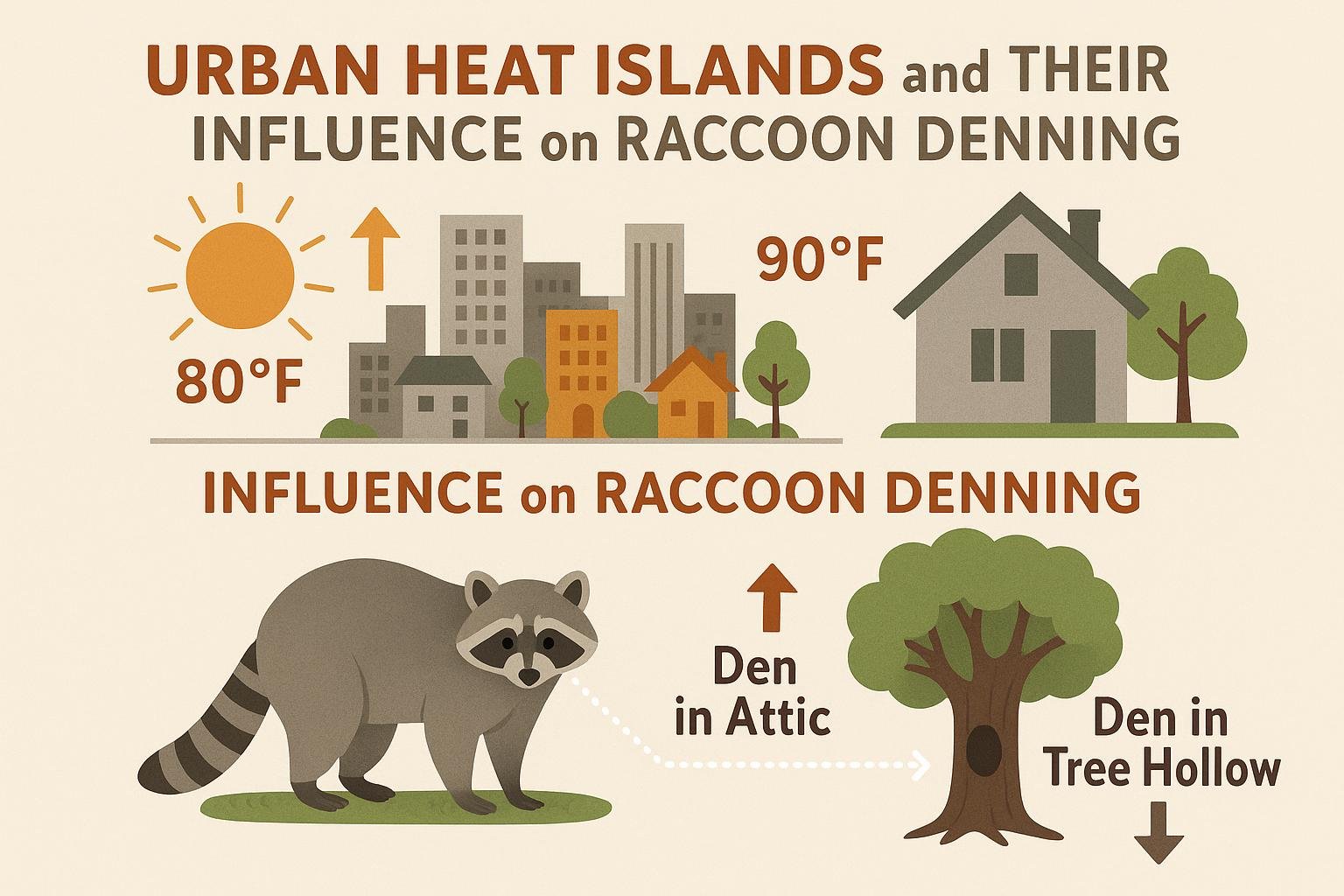
Urban Heat Islands and Their Influence on Raccoon Denning
Introduction to Urban Heat Islands
Urban heat islands (UHIs) occur when built environments such as cities become significantly warmer than nearby rural areas. This warmth results from human activities, dense infrastructure, and limited vegetation. Surfaces like asphalt, concrete, and rooftops absorb and retain heat during the day and release it slowly at night. The effect causes average temperatures in many cities to be several degrees higher than surrounding countryside.
Cities in southern Ontario, including Toronto and Hamilton, frequently experience UHIs during summer months due to their dense housing and industrial zones. This temperature difference can impact local wildlife, including raccoons, altering their behavior and habitat choices.
Raccoon Behavior in Urban Settings
Raccoons (Procyon lotor) adapt well to urban areas. They are opportunistic and find food easily in garbage, gardens, and pet areas. Raccoons also use various man-made structures for shelter, such as attics, sewers, chimneys, and abandoned buildings. Urban raccoons face fewer predators but must navigate human disturbances and environmental hazards.
Raccoons create dens to rest, raise young, and seek shelter from weather extremes. These dens can be in hollow trees in suburban parks or inside wall cavities in older buildings. Temperature and safety strongly influence den choice.
How UHIs Affect Raccoon Denning
Higher temperatures in urban heat islands can change how raccoons select and use dens. Warmer nights and less temperature fluctuation reduce the need for dens to provide strong insulation. In many cases, raccoons in UHIs may use more exposed or unconventional den sites compared to rural raccoons.
Temperature Influence
Raccoons require cool, dark, and dry den spaces during hot summer days and safe shelters in winter. Urban heat islands create warmer microclimates where raccoons might forgo deeper or insulated dens because external temperatures remain within tolerable ranges. This tendency can increase raccoon presence in areas of human activity, such as building attics or crawlspaces, which provide shelter and remain relatively cool.
Seasonal Denning Changes
Raccoons typically reduce activity in colder months and rely heavily on dens to conserve energy. UHIs can soften winter cold spells, leading some raccoons to remain more active in cities than in rural settings. These animals might switch dens less frequently or choose den locations closer to food sources like residential trash bins.
Lower winter severity linked to UHIs might also extend the denning period, especially for females with young kits. The warmer environment can influence the timing of breeding and rearing young, potentially leading to shifts in denning behavior patterns.
Structural and Environmental Factors in Cities
In Toronto and similar urban areas, housing stock often includes older buildings with accessible crawl spaces and attics. These structural features provide ideal denning opportunities for raccoons. Additionally, mature street trees and parklands within a city offer natural denning options. Heat islands influence the suitability of these locations by altering temperature and humidity levels.
Urban infrastructure, such as storm drains and sewer systems, also offers secure, warm denning environments. The consistent temperature of underground sewer systems contrasts with fluctuating temperatures on the surface, especially in heat islands, and raccoons often exploit these conditions.
Common Misconceptions About Urban Raccoon Denning
One misconception is that raccoons only settle in rural or forested areas. In reality, urban raccoons have adapted to a variety of environments, including densely built areas affected by UHIs. Another misunderstanding is that raccoons always choose dens for temperature regulation alone. While temperature is critical, other factors such as safety from predators and proximity to food also influence den locations.
It is often assumed that urban heat islands only negatively affect wildlife. However, in some cases, warmer temperatures can reduce stress on animals by minimizing exposure to extreme cold. For raccoons, mild urban winters may improve survival chances, though the risk of disease transmission can also rise in denser populations.
Seasonal and Environmental Patterns Observed in Ontario Cities
Toronto and Hamilton show clear patterns of raccoon denning linked to urban heat islands. Field reports indicate raccoons emerge earlier from dens in urban cores than in less developed suburbs. Also, urban raccoons tend to shift dens more frequently during warmer months, likely responding to changes in available shelter warmth.
In winter, raccoons may remain in man-made structures longer, as urban heat islands moderate temperature drops. This behavior contrasts with rural raccoons, which often enter deeper hibernation or rely on natural hollows.
Vegetation cover influences microclimates within heat islands. Parks with dense trees provide shaded cooler spots that raccoons use during heat waves. They might move between urban parks and nearby neighborhoods as part of their habitat use.
Legal and Ethical Context in Ontario
Ontario regulations restrict interference with raccoon dens, especially during breeding seasons (spring to early summer). Removing or disturbing dens during this time can violate wildlife protection laws. The influence of UHIs on raccoon behavior means den locations may include difficult-to-access urban sites, complicating human-animal interactions.
Ethically, cities must acknowledge the role of urban environments in wildlife habitation and plan green spaces to balance heat island effects. Allowing denning behaviors in safe parts of the city benefits ecosystem functioning and animal welfare.
Challenges and Limitations in Managing Urban Raccoon Denning
Urban heat islands create microhabitats that raccoons exploit, but they also generate challenges for both wildlife and human residents. Warm conditions in urban dens may increase parasite loads or diseases carried by raccoons. This factor can contribute to public health concerns without causing animals to vacate prime den sites.
Structures provide abundant shelter, yet aging buildings often have vulnerabilities that invite raccoon entry. Even with maintenance efforts, raccoons persist due to the availability of heat island effects maintaining favorable microclimates inside walls and roofs.
Seasonal changes and weather variability further complicate predictability. Extreme heat waves or sudden cold snaps may alter raccoon denning behavior unpredictably. This uncertainty is typical for urban wildlife and underlines why patterns should be observed over multiple years.
Example Case: Toronto Neighborhoods
Data from Toronto’s older urban neighborhoods show raccoons increasingly occupy attics and chimney spaces during warm months. The UHI effect moderates dramatic temperature swings, making man-made structures consistent shelters. In summer, raccoons avoid direct roof exposure during hot days by retreating to shaded attics.
In suburban fringe areas with more green space but less heat buildup, raccoons often select tree hollows or thick shrubbery. This contrast reflects how urban heat islands create distinct wildlife microhabitats within the same metropolitan region.
Conclusion
Urban heat islands influence raccoon denning behavior by altering local temperatures and habitat conditions. In southern Ontario cities like Toronto and Hamilton, warmer urban cores support year-round raccoon activity and flexible den choice. Structures with stable temperatures inside the heat island attract raccoons, especially during extreme weather.
This dynamic shapes the interaction between humans and urban wildlife, showing the need to understand environmental patterns affecting animal behavior. While UHIs provide warmer refuge, they may also raise challenges related to disease and building damage. Observing these patterns remains valuable for managing coexistence in cities dominated by urban heat islands.
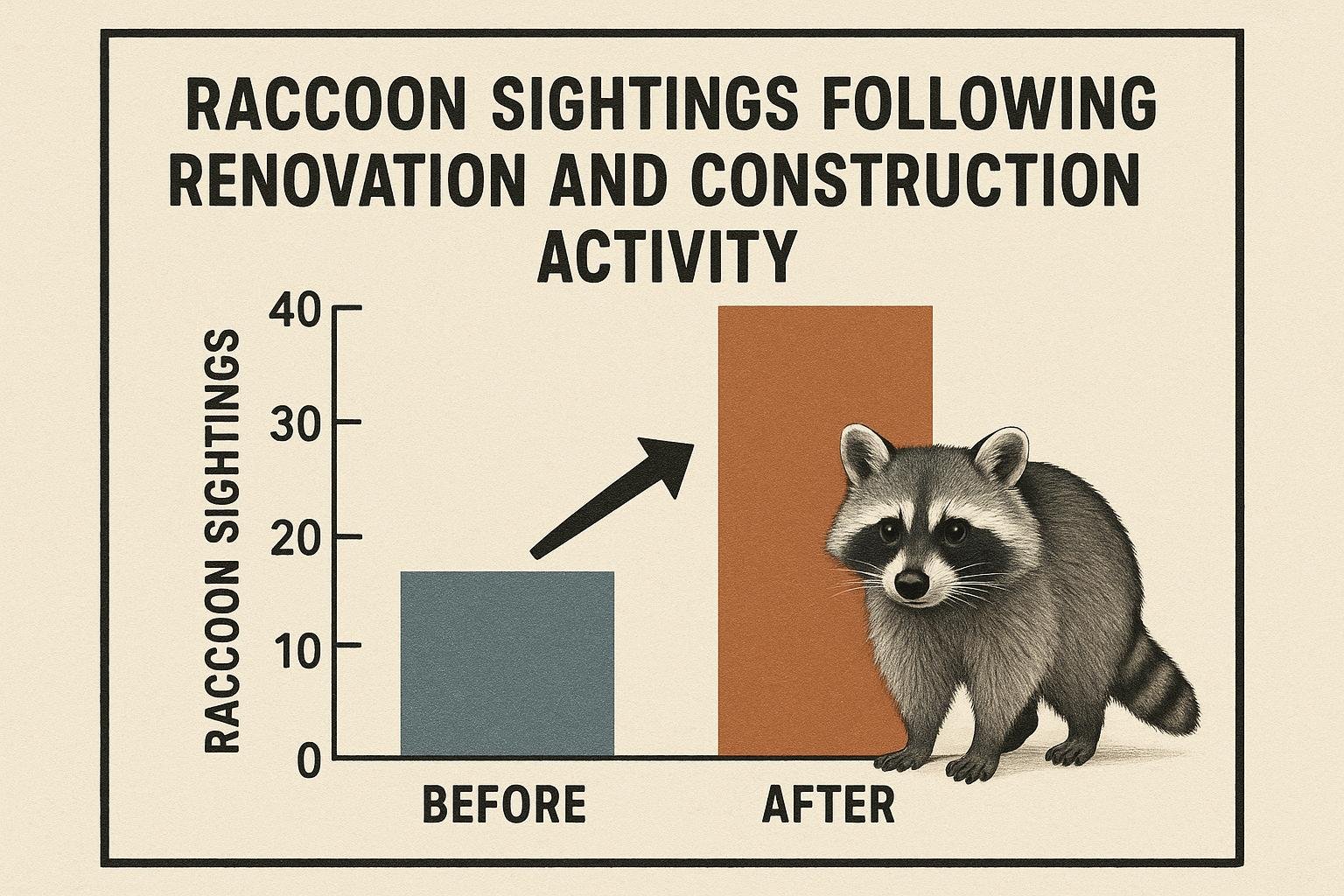
Raccoon Sightings Following Renovation and Construction Activity
Raccoon sightings often increase after renovation or construction work takes place in a neighborhood. Many residents in cities like Toronto, Ottawa, and other parts of Ontario notice more raccoons around their properties after nearby work disturbs the environment. Understanding why this happens involves looking at the natural behavior of raccoons, how construction changes habitats, and the impact on local ecosystems.
Why Raccoons Appear More After Construction
Raccoons live in urban, suburban, and rural areas across Ontario. They prefer quiet and sheltered habitats, such as wooded areas, abandoned buildings, or dense vegetation. Construction and renovation work typically disrupt these spaces. Noise, vibration, and movements can drive animals out of their usual hiding places. This disruption causes raccoons to search for new habitats or food sources closer to human dwellings.
Renovation activities may include removing trees, digging soil, or tearing down old structures. Each action modifies the local environment and may remove or reduce natural shelters for raccoons. As a result, raccoons move towards nearby homes, often seeking attics, decks, or sheds for safety.
Urban and Suburban Housing Impact
Ontario’s urban neighborhoods often contain older houses with features like wooden eaves, chimneys, and loose siding. These provide easy access points for raccoons seeking shelter. Construction around these houses can accidentally open new entry points or expose hidden gaps, making it easier for raccoons to enter.
Older homes built with materials and designs common decades ago sometimes have loose or weakened areas. Construction work may involve removing or repairing these parts, which temporarily leaves the property vulnerable. Raccoons are adaptable and opportunistic, so they exploit these openings to rest during the day or hide from predators.
Seasonal Factors in Raccoon Activity
Raccoon behavior varies by season, and this timing can affect sighting frequency after renovation.
- Spring: Raccoons leave dens and search for mates and food. Disturbance in this period drives raccoons to move quickly.
- Summer: Mothers rear their young and seek quiet nurseries. Construction during summer forces family groups into new areas, often near homes.
- Fall: Raccoons increase feeding to prepare for winter. Nearby renovation may push them into residential areas with accessible food waste.
- Winter: Raccoons usually den but can move frequently in warmer winters or milder urban climates if disturbed.
Construction occurring in the spring or summer often causes more visible disruptions in raccoon patterns than work timed in the winter.
Common Misconceptions About Increased Raccoon Sightings
Residents frequently misinterpret the increased raccoon presence following construction. One common belief is that renovation work attracts raccoons by providing food. In many cases, construction disturbs nearby food sources rather than creating new ones. Raccoons instead move to find existing food in trash bins, bird feeders, or gardens.
Another misconception is that raccoons become aggressive or intentionally invade homes due to human activity. Raccoons generally avoid humans and enter properties only when seeking shelter or food. Their increased sightings reflect displacement rather than unusual behavior changes.
Environmental and Structural Causes of Raccoon Encroachment
Raccoons depend heavily on available food, water, and shelter. Renovation projects usually alter one or more of these factors:
- Shelter loss: Trees, shrubs, or abandoned buildings may be removed. This loss removes typical nesting locations.
- Habitat fragmentation: Construction divides continuous green spaces, forcing raccoons to navigate more human areas.
- Access to human dwellings: Construction can create gaps or openings in roofs and walls.
- Food disruption: Disturbed soil or unearthed trash bins can expose food scraps previously hidden underground.
In places like southern Ontario, where urban sprawl encroaches on former rural or woodland zones, raccoons already adapt to human spaces. Construction accelerates this transition by reducing natural areas.
Why Raccoon Problems May Recur Post-Construction
Raccoons are intelligent and persistent animals. Once they find shelter near a home, they may return repeatedly or bring family members.
Many houses have external features inviting raccoons because of easy climbing surfaces like fences, trees, or latticework. Renovation alone does not remove all these access points and may inadvertently add new ones.
Temporary disturbance from construction may only displace raccoons briefly, but as work ends, animals explore and recolonize available spaces. This repeated pattern contributes to seasonal or ongoing sightings after initial activity.
Legal and Ethical Considerations in Ontario
Ontario wildlife laws protect raccoons from harm or illegal trapping. Municipal regulations may restrict wildlife control efforts within city limits. Homeowners must abide by these rules when addressing raccoon presence.
Many municipalities also restrict construction or animal control during the spring breeding season to protect nursing female raccoons and their young. This timing can delay any removal or exclusion efforts, allowing animals to remain temporarily.
The legal framework balances protecting wildlife with reducing human-wildlife conflicts. Continuous sightings after renovation often reflect these temporary protections and natural animal cycles.
Examples of Raccoon Patterns in Ontario Neighborhoods
Field reports from several Ontario cities show similar trends in raccoon sightings after construction work:
- In older Toronto neighborhoods with many pre-1950 homes, residents observe raccoons entering attics after roof repairs.
- In Ottawa’s suburban zones, tree removal for new housing developments drives raccoons into backyard sheds.
- In communities around Hamilton, disturbed riparian areas from infrastructure upgrades prompt raccoons to seek shelter near homes.
- Smaller towns with limited green space also report increased raccoon activity following excavation or building renovation.
These regional examples confirm that construction-related disturbances affect raccoon behavior consistently in the province.
Pros and Cons of Increased Raccoon Presence After Construction
Pros
- Raccoons help control insect and rodent populations naturally.
- Their presence can indicate the health of local ecosystems despite urban pressures.
- Observing wildlife may increase awareness of natural surroundings.
Cons
- Raccoons may damage property by nesting in attics or tearing insulation.
- They sometimes spread parasites, such as raccoon roundworm.
- Increased sightings can lead to conflicts or safety concerns, especially if animals scavenge human food.
Conclusion
Raccoon sightings often rise following construction or renovation due to habitat disruption. Noise, removal of shelter, and altered food sources drive raccoons to explore new areas, including nearby homes. Ontario’s older housing stock, seasonal changes, and wildlife protection laws all influence these patterns.
Understanding these factors clarifies why raccoon presence increases and why the problem may persist after work ends. These animals adapt quickly to urban environments but also face challenges from human activities. Observations from Ontario cities show that raccoon behavior closely ties to changes in their habitat caused by construction.

Daytime Invisibility and Nocturnal Adaptation in City Raccoons
City raccoons exhibit distinct behaviors shaped by their urban environments. Two key survival traits often observed in these animals are daytime invisibility and nocturnal adaptation. These patterns arise from interactions between raccoon biology, city infrastructure, human activity, and environmental pressures. This article explains how raccoons use these traits in Canadian urban areas, with a focus on observable causes and effects.
Urban Setting and Raccoon Behavior
Raccoons have adapted to live within cities such as Toronto, Ottawa, and Hamilton. These cities present mixed environments ranging from older residential neighborhoods to industrial zones and parks. The urban layout, housing types, availability of food, and human presence influence raccoon activity.
In many city areas, raccoons face increased risks during daytime hours. Human movement, vehicle traffic, and noise levels tend to peak then. Raccoons often respond by minimizing their visible presence during the day. They prefer hidden resting spots over open areas. Typical daytime shelters include spaces under decks, inside chimneys, attic voids, or behind dense vegetation in parks.
Daytime Invisibility: Reasons and Mechanisms
Daytime invisibility means raccoons reduce their exposure to human activity during daylight. This behavior is primarily a response to predation risk and disturbance. Although raccoons are not commonly preyed upon in cities, humans or pets may pose threats. Avoiding detection minimizes confrontation and stress.
Physiologically, raccoons show little change during daytime. The invisibility is more behavioral and spatial. They become largely inactive, resting or sleeping in concealed spots. They adopt crouched postures and reduce movements. Their fur pattern, which includes dark patches around the eyes, helps them blend into shadowed areas.
Moreover, the urban environment offers many hidden or semi-hidden places that help raccoons remain unseen. These include:
- Inside wall cavities of older housing stock
- Underneath abandoned vehicles or piles of debris
- Dense clusters of trees or shrubs in city parks
- Secluded corners of construction sites
Avoidance of open spaces during the day contrasts with their nighttime behavior. The frequent use of such shelters explains why raccoon sightings by humans are often limited to evening or night hours.
Nocturnal Adaptation and Activity Patterns
City raccoons show strong nocturnal activity. They become more active shortly after sunset and continue until just before sunrise. Nocturnal adaptation allows raccoons to exploit food sources and spaces when human activity decreases. In many Canadian cities, reduced lighting and lower traffic enhance raccoon movement success.
Their nocturnal lifestyle aligns with specific sensory and physical adaptations:
- Enhanced night vision capability, benefiting from the tapetum lucidum, a reflective layer behind the retina
- Highly developed sense of touch, using sensitive forepaws to locate and manipulate food in low light
- Acute hearing that detects quiet sounds of prey or approaching threats
These traits help raccoons forage effectively in urban environments. They often scavenge from garbage bins, compost piles, or leftover food near outdoor dining areas. Additionally, parks and riverside edges provide natural food such as insects, small fish, or amphibians mostly active at night.
Seasonal and Environmental Influences
Daytime invisibility and nocturnal habits fluctuate depending on the season. In winter months, raccoons tend to reduce overall activity and rest longer during daylight to conserve energy. Urban heat effects, such as warmer microclimates near buildings, influence how much raccoons shift timing or length of activity bouts.
In spring and summer, increased temperature and daylight may extend nocturnal foraging into early dawn. Rain and snow also impact when and where raccoons travel. Wet or icy conditions typically decrease movement due to higher energetic costs and risk of injury.
Environmental features in Canadian cities affect raccoon behavior differently. Older neighborhoods with mature trees and garden waste offer more natural cover than densely built new developments. Industrial zones may provide shelter opportunities but less food. Awareness of local traits helps explain why visibility during daytime varies between city sectors.
Common Misconceptions about Raccoon Behavior
Residents often misinterpret raccoon activity based on sporadic daytime sightings. Seeing raccoons in daylight does not necessarily mean they are active or thriving in those hours. Frequently, these appear during the day due to disturbances such as:
- Den site conflicts
- Food shortages prompting desperate foraging
- Young raccoons learning to explore outside normal schedules
The presence of raccoons during the day may indicate stress rather than a change in natural behavior.
Another misconception involves assuming raccoons are mostly pests because of their nocturnal scavenging. While they do raid garbage, their role in the urban ecosystem includes insect control and seed dispersal. Their nocturnal lifestyle reduces direct human-raccoon conflict most of the time.
Challenges in Managing Daytime Visibility and Nocturnal Activity
Attempts to reduce raccoon interactions in cities face challenges tied to their behavior patterns. Because raccoons avoid daylight and rely on night cover, observable signs such as noise or damage often appear suddenly and unpredictably. Many structural entry points remain hidden, such as roof gaps or foundation vents, that raccoons use to access shelter.
Seasonal timing affects control measures, as raccoons entering breeding or denning periods limit interventions due to animal welfare laws. The Ontario Fish and Wildlife Conservation Act restricts disrupting breeding females or young during specific times, making monitoring and management complicated.
Moreover, raccoons’ nocturnal habits mean residents often become aware of their presence only after damage or noise complaints at night. This delay reduces chances for early observation or preventive action.
Examples of Urban Raccoon Behavior in Canadian Cities
Field reports from cities like Toronto indicate raccoon populations concentrate in older residential districts with large backyards and mature trees. These areas provide abundant daytime refuges and nightly food waste from households.
In Ottawa, park-adjacent neighborhoods show raccoons using riverbanks and wooded patches for shelter during daylight. Nighttime activity includes foraging near sports fields or outdoor eating areas.
Hamilton’s industrial and mixed-use zones provide an unusual pattern where some raccoons appear active before dawn in quieter factory lots. This variation reflects local differences in noise, lighting, and human work shifts.
Summary
City raccoons in Canadian urban areas display daytime invisibility combined with nocturnal adaptation. They avoid detection during daylight by resting in hidden shelters and become active at night to forage and move safely. This behavior results from evolutionary traits and responses to urban pressures including human disturbance, available shelter, and food source timing.
Seasonal changes and environmental factors modulate these patterns, while misconceptions about daytime sightings often arise from unusual or stressed conditions. Understanding these behaviors explains why raccoons remain elusive by day and primarily active after dark in most city scenarios.
Such clarity reduces confusion about raccoon presence and highlights the complex balance these animals maintain as they coexist with urban residents.
The Role of Laneways and Alleys in Raccoon Travel
Introduction
Raccoon travel in urban settings is a common occurrence that presents itself within cities or regions. In these settings, raccoons make use of certain routes for their movement. In many cases, they use laneways and alleys as their primary paths for travel. This article will delve into why laneways and alleys are using preferred travel routes for raccoons, underlying structural and environmental factors, and certain limitations or constraints that may influence these patterns.
Why Raccoons Use Laneways and Alleys
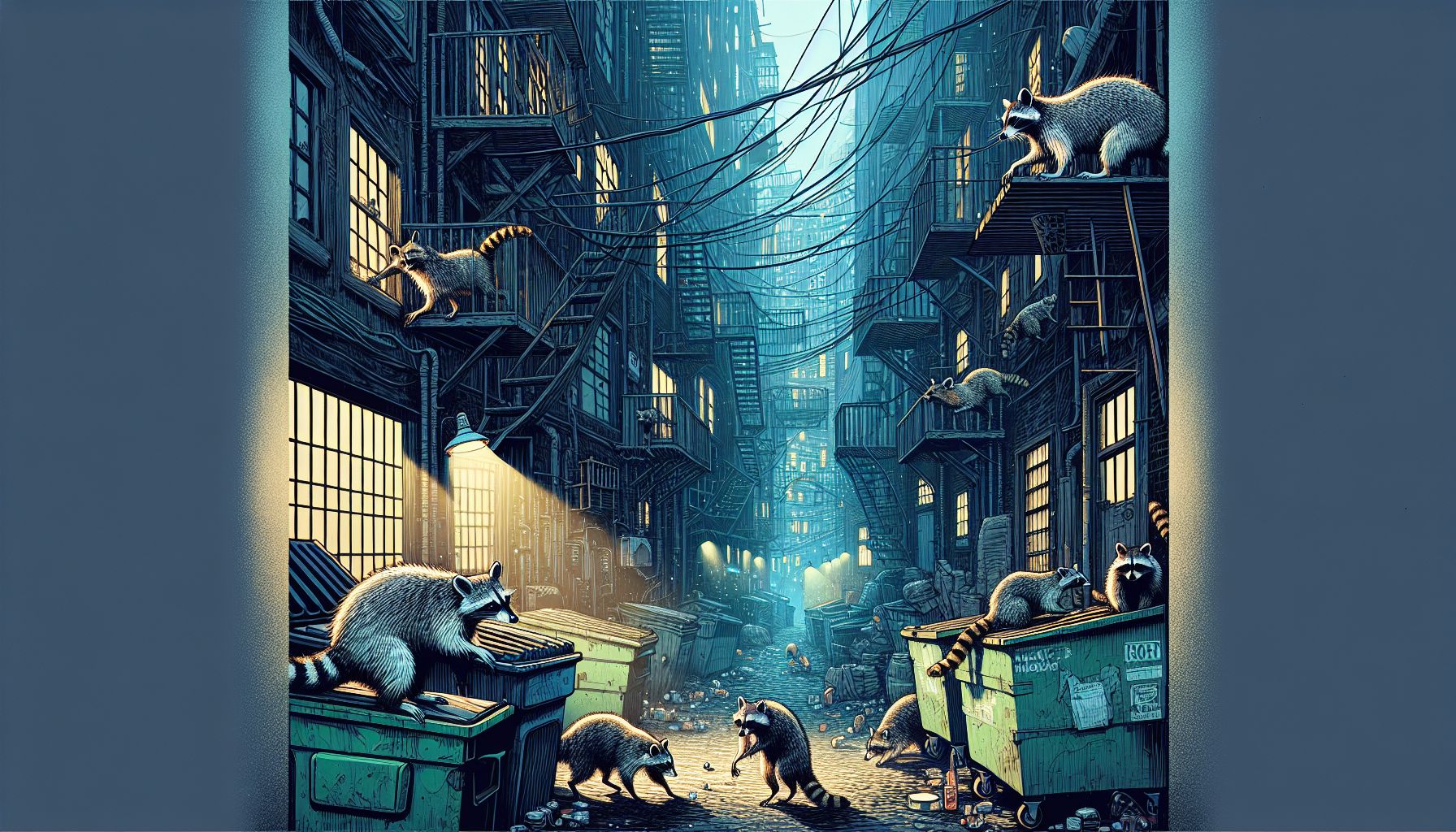
In urban settings, raccoons are often seen venturing in and out of laneways and alleys. These spaces offer a form of shelter and protection from potential threats. Laneways and alleys are typically quieter and less populated, with little foot traffic compared to main streets, making them ideal for raccoons to travel undisturbed.
Structural Factors
Structurally, laneways and alleys are often lined with a variety of structures such as rubbish bins, fences, or shrubs that provide raccoons with hiding spots. This layout gives them an opportunity to remain out of sight while travelling or when in search of food.
Household rubbish bins tend to be tucked away in these spaces. Raccoons are opportunistic eaters. They find large concentrations of food residue in rubbish bins attractive. The structural arrangement of laneways and alleys hence play a significant role in encouraging raccoon travel in these areas.
Environmental Factors
Raccoons are nocturnal creatures which means they are active during the night. The dimly lit environment of laneways and alleys provides good cover for raccoons as they go about their routines. Furthermore, these spaces also often have some form of greenery or trees that raccoons can climb. This allows them a quick means of escape in case of a sudden threat.
Seasonal Factors
Seasonally, raccoon activity in lanes and alleys can vary. During the summer months, when food is abundant, there can be increased raccoon activity in these spaces. On the other hand, in winter, raccoons often limit their activity, and thus, the usage of lanes and alleys may decrease.
Limitations or Constraints
While laneways and alleys are prime routes for raccoons, their use of these spaces is not without limitations or constraints. Raccoons tend to avoid places frequented by large animals, including dogs. Additionally, human activity such as regular garbage disposal or alley maintenance can occasionally disrupt raccoon travel patterns.
Conclusion
Taken together, raccoons use laneways and alleys as routes of travel due to a multitude of factors. This can include quieter and less populated spaces, structural and environmental elements conducive to their behavior, and seasonal factors. However, their use of these spaces can also vary based on certain limitations or constraints. Understanding these factors helps shed light on raccoon travel patterns in different urban settings.
Rooflines, Soffits, and Fascia as Common Urban Access Points
One common issue that homeowners in urban environments often face is the intrusion of pests or wildlife. Structurally, the characteristics of a house — including rooflines, soffits, and fascia — often serve as entry points for these unwanted visitors. This article aims to enlighten you about these common architectural features and their roles as access points.
Rooflines as Access Points
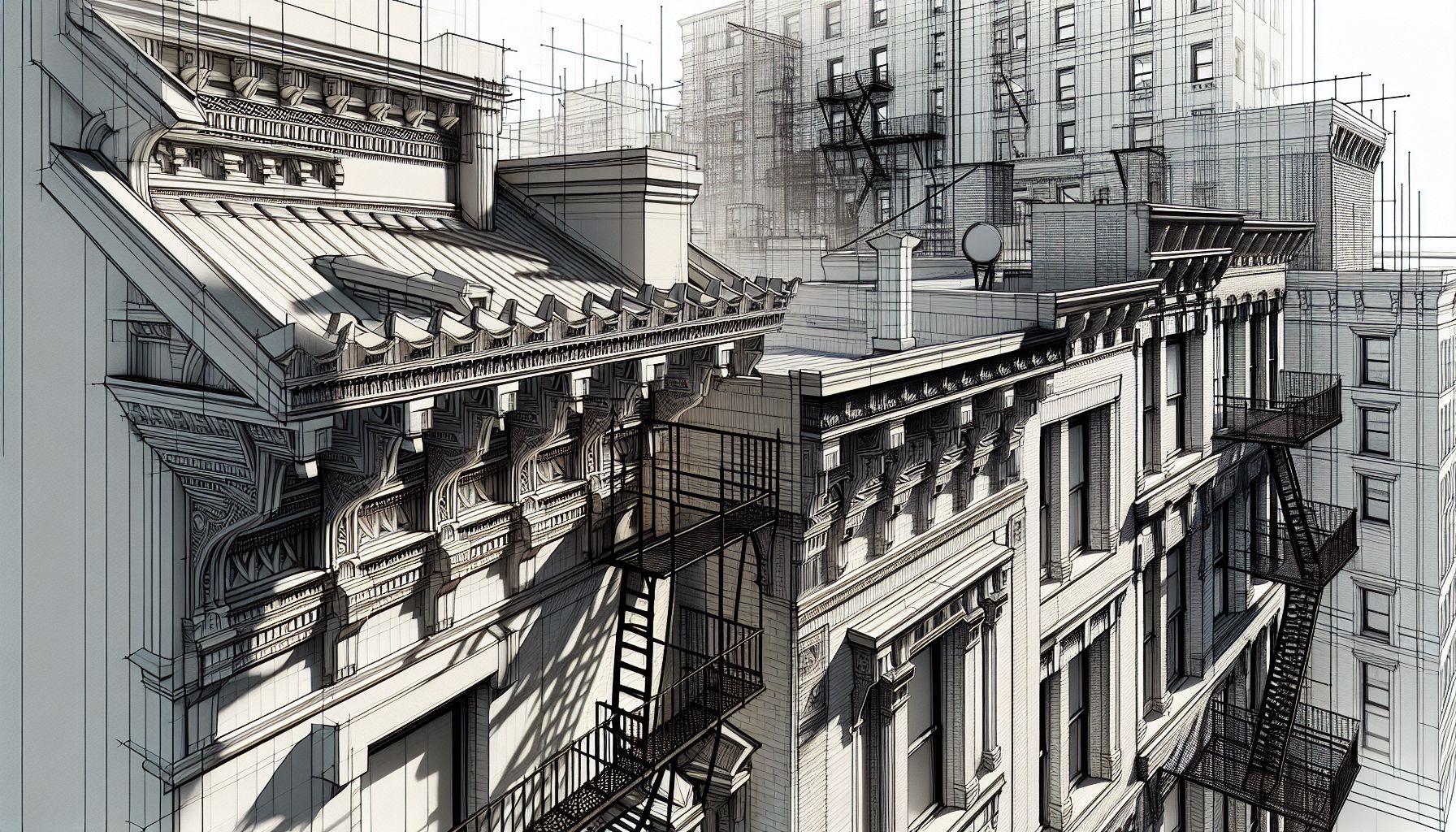
The design and location of rooflines in urban houses often make them suitable access points for pests. Typically, houses in cities have overlapping rooflines, creating small gaps at the edges. In many cases, pests such as squirrels or birds find these gaps and use them as entry points into attic zones.
Why do pests target rooflines? The answer lies in their natural survival instincts. Rooflines offer a concealed, safe route into the house, providing shelter from weather and predators.
Role of Soffits
Soffits are the material between the edges of eaves (where your rain gutters are) to the side of your house. Their main purpose is to ventilate attic areas, but unfortunately, they can also act as access points for pests. In many cases, soffits in urban houses are not properly sealed or are constructed from material susceptible to decay or damage. Pests such as rats or bats can gnaw through, or capitalize on existing weaknesses, to gain access to the building.
The Significance of Fascia
Similar to soffits, fascia — the vertical surface just below your roofline — also play a significant role in urban pest incursions. Predominantly made of wood, fascia boards are vulnerable to damage. Weathering, old age or gutter overflow can weaken these boards, making them an easy target for pests such as raccoons or birds.
Misconceptions About Access Points
A common misconception is that pests can only infiltrate houses with visible damage or decay. However, even new, well-maintained homes can be susceptible due to architectural design or building materials. Moreover, small pests require only tiny spaces to infiltrate a home, and these small spaces can often go unnoticed by homeowners.
Recurring Patterns and Constraints
Most pest or wildlife intrusion incidents in urban areas exhibit a seasonal pattern. For instance, during the colder months, pests often seek shelter in warm, enclosed areas like attics. Furthermore, constraints such as local laws and ethics often limit the use of deterrents or traps to prevent these intrusions.
Urban homeowners also struggle with recurring pest intrusions. Partial remedies, such as sealing visible entry points, may provide a temporary solution but often fail in the face of persistent pests.
Final Thoughts
Urban housing, with features like rooflines, soffits, and fascia, provides convenient access points for pests and wildlife. As a proactive measure, regular inspection and proper maintenance of these features can limit potential intrusions. Yet, it’s important to remember: even the best measures may not always prevent determined pests from finding their way in.

Late-Winter Increases in Urban Raccoon Activity
Raccoons, these nocturnal creatures, are ubiquitous in urban areas. As winter draws to an end, their activity increases significantly. This pattern is consistent across many cities and regions. There are several reasons underlying this late-winter surge in raccoon activity.
Adaptation to Urban Environment
Raccoons are highly adaptable creatures and have mastered life in urban areas. In cities, raccoons find ample food sources and shelter, significantly more than in wilder environments. This availability of resources leads to denser raccoon populations and subsequent increases in activity, especially at the end of winter.
Late-Winter Breeding Season
A key reason for the heightened activity of raccoons towards the end of winter is their breeding season. Raccoons typically breed from January to March, with most mating happening in late February. This peak in breeding activity results in more visible movement as males search for mates and females prepare nests.
The Search for Food
After the breeding season, raccoons become more active in their hunt for food. This is where urban environments come into play. The plethora of food available in cities, from accessible garbage cans to pet food left outdoors, attracts raccoons. This increased foraging plays a vital role in the rise in late-winter raccoon activity.
Misconceptions about Raccoon Behavior
A common misconception is that raccoons hibernate during winter. This is not accurate. While raccoons do reduce their activity and sleep for extended periods during the cold months, this is not true hibernation. They wake periodically to forage and eat, which is why you might spot them even in deep winter. This behavior replaces the hibernation myth and helps explain the upsurge in their late-winter activity.
Deterrents and Constraints
Several deterrents and constraints can limit raccoon activity. These include physical barriers and regulations. For example, sealed trash bins and secured structures can prevent raccoons from accessing food. In many areas, regulations prohibit feeding raccoons intentionally, which helps control their numbers and activity. However, these measures often have limited the effectiveness due to the adaptability and intelligence of these animals.
Environmental and Climatic Factors
The local climate influences raccoon behavior. In regions with milder winters, raccoon activity may not decrease as much during the colder months. Consequently, the late-winter surge in activity may be less noticeable than in areas with harsh winters, where raccoons reduce their activity level more considerably during the cold months.
Recurring Patterns and Regional Differences
The late-winter increase in urban raccoon activity can vary by region. For example, in cities with warmer climates, raccoons may be active year-round. In cooler regions, raccoons decrease their activity in winter, leading to a noticeable upswing towards the end of the season.
Municipal, environmental, and seasonal factors all interact in intricate ways to shape raccoon habits. Understanding these trends can offer insights into the annual patterns of raccoon activity in our cities, helping to anticipate and interpret the rhythms of urban wildlife in different regions.
In conclusion, many intertwined factors contribute to the surge in raccoon activity in late winter. Their adaptability, breeding habits, food-seeking behavior, the absence of true winter hibernation, along with regional climatic factors, all play a part. This spike in activity serves as a reminder of how wildlife adapts to urban life, reminding us of our daily interaction with the animal world, even in the heart of our bustling cities.
Raccoon Behaviour in Post-War Toronto Housing Stock
Wildlife often intermingles with urban landscapes, and one of the notable creatures in the cityscape of Toronto is the raccoon. In particular, this article will focus on how these small mammals behave in the unique environment of post-war Toronto housing stock.
Coexistence and Adaptability
Following the Second World War, Toronto experienced a surge in housing construction. These homes, characterized by their structural similarities, have since shared spaces with different wildlife, including raccoons. Raccoons, known for their adaptability, have prominently settled within these domains.
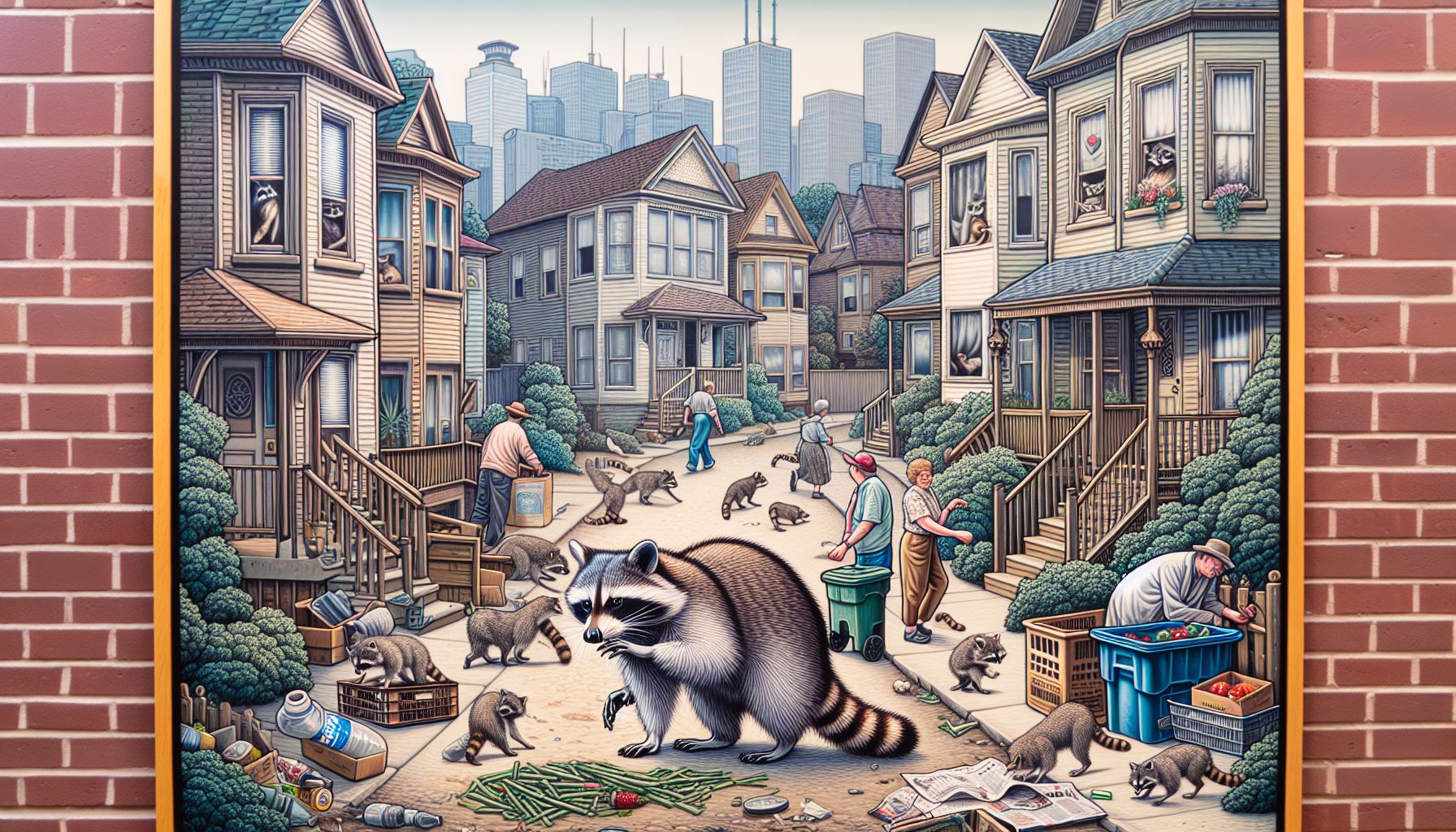
In this housing, one might notice reports of frequent raccoon sightings, particularly during the night. These animals are primarily nocturnal, and they often scavenge around the area in search of food. Toronto’s waste management system, which secures garbage in bins, has seen raccoons develop impressively advanced problem-solving skills to access potential food sources.
Seasonal Patterns
Raccoon behaviour in Toronto also varies with the seasons. During the warm months, raccoons are more active, exploring the area and often causing a ruckus in their nightly scavenging. They take full advantage of the easily accessible food sources, including amenities provided by residents and naturally occurring food like fruits and insects.
Conversely, as winter sets in, raccoons in Toronto become less active. This period, referred to as “torpor,” is characterized by minimal activity and reduced body functions. It’s worth noting that raccoons do not hibernate. Instead, they retreat into their dens – often within the Toronto housing structures – in search of warmth and occasional foraging during milder weather.
Impact on Housing Structures
Racoons, though small in size, can cause notable structural damages. Entry points such as roof vents, chimneys, and attic windows, frequently observed in post-war Toronto housing, make these houses particularly vulnerable. Raccoons take advantage of these openings to nest and reproduce, especially during spring, when young ones are born.
Additionally, raccoons often claw and chew their way into these spaces, causing extensive damages. Structural and foundational flaws in aging Toronto houses can make it especially easy for raccoons to gain entrance.
Misconceptions and Ethics
Despite the challenges they bring to residents, it’s essential to dispel common misconceptions about raccoons. For instance, raccoons aren’t aggressive animals. They’ll typically avoid human interaction as much as possible. However, cornering or attempting to remove them can lead to defensive behaviour which can be interpreted as aggression.
Moreover, it’s vital to understand the ethical considerations surrounding wildlife within urban settings. As defined by the laws in Ontario, any ill-treatment of raccoons, including killing or relocating them over one kilometer away, is forbidden. These laws aim to protect the animals while maintaining the delicate balance of urban ecosystems.
Why The Problem Persists
The frequency of raccoon intrusions in Toronto housing persists for multiple reasons. One significant cause arises from their adaptability to changing environments, coupled with the rich feeding ground the city provides. The vast number of post-war houses and their structural vulnerabilities result in a perfect habitat for nesting during torpor and reproduction periods.
In conclusion, Raccoons in post-war Toronto housing stock coexist with residents while demonstrating unique behavioural trends influenced by the structural environment and seasonal changes. As urban dwellers, it’s crucial to understand their adaptive lifestyle while keeping in mind the legal and ethical guidelines that foster a peaceful human-wildlife coexistence.

Attics as Den Sites in Dense Urban Environments
Pest and Wildlife Behavior in Urban Spaces
In most dense urban environments, many forms of wildlife seek shelter in places that mimic their natural habitats. In many cases, these animals discover attics as suitable den sites, as attics often offer warmth, safety and isolation. Understanding why attics appear attractive to wildlife is vital in order to comprehend how specific patterns impact dense urban areas.
The Appeal of Attics
Attics are generally darker, quieter, and have fewer human interruptions, increasing their usefulness as den sites in the urban context. They offer an ideal location that can effectively shield wildlife from harsh weather conditions. Apart from these physical aspects, attics are usually located closer to food sources, increasing their appeal to a wide variety of urban wildlife.
Common Attic Dwellers
Rodents such as rats and squirrels typically select attics as their home in urban environments. These small animals easily exploit structural weaknesses to gain access. Raccoons and bats also show a preference for attics because the enclosed space resembles their natural habitats like tree hollows or caves.
Seasonal Patterns in Urban Wildlife Adoption of Attics
In some regions, the adoption of attics by pests and wildlife follows a seasonal pattern. During the colder months, warmth-seeking pests, like rats and squirrels, remain the most common attic dwellers. However, in warmer seasons, this varies as different species of birds and bats may utilize these spaces for breeding and nurturing their offspring.
Urban Housing Vulnerabilities
In dense urban environments, the age and design of the housing stock might increase the vulnerability to pest invasions. Older homes often have small openings due to aging infrastructure, which animals can exploit. Newer homes, while often more sealed, can still offer access points through vents, chimneys, or unfinished construction.
Misconceptions and Actual Realities
Contrary to popular belief, the existence of urban wildlife in attics does not necessarily imply poor cleanliness or home maintenance. In many cases, these creatures are simply adapting to their surroundings and overcoming survival challenges in concrete jungles.
Effective Solutions and Their Limitations
Dealing with pests and wildlife in attics is subject to numerous legal, environmental, and ethical considerations. In many urban settings, certain species are protected by law, limiting the course of action. Additionally, while relocation might seem like an ideal solution, it can lead to other issues such as the spread of disease or environmental imbalance.
Recurring Pattern and Challenges
Even after pests have been removed, attic invasions recur often. This is partly due to the fact that animals leave behind pheromones, which attract other members of the species. Additionally, without proper modifications, the same access points can be used by new pests.
In conclusion, attics serve as essential den sites in dense urban environments. Understanding this, along with recognizing why challenges persist, can help reduce misperceptions and encourage more effective and ethical urban wildlife management.